
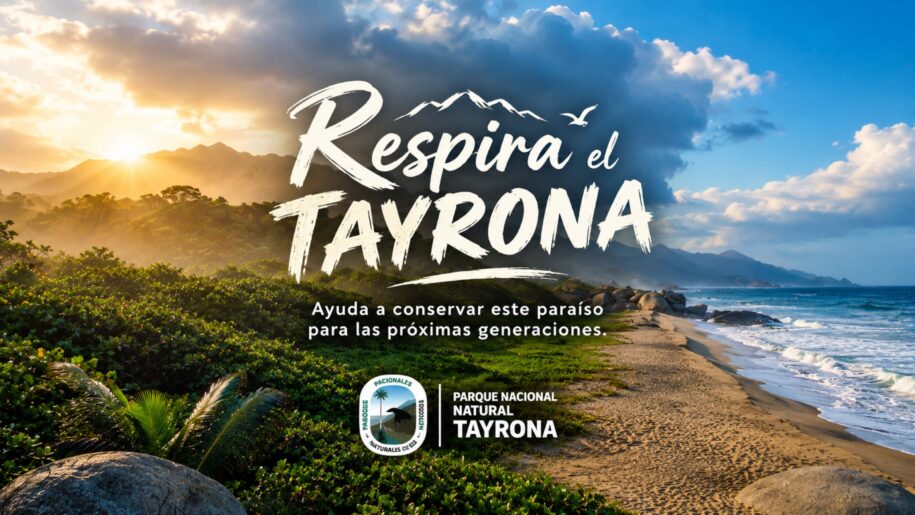
When tourism stops, the territory breathes again
Tayrona National Natural Park is much more than one of Colombia’s most important Caribbean tourist destinations. It is a living natural and ancestral territory where beaches, forests, mangroves, coral reefs, wildlife, water sources and places of deep spiritual significance for the Arhuaco, Kogi, Wiwa and Kankuamo peoples come together.
That is why, three times every year, the park does something unusual: it temporarily closes its doors to tourism.
This strategy is known as “Respira Tayrona” — “Breathe Tayrona” and is implemented by National Natural Parks of Colombia, in coordination with the four Indigenous peoples of the Sierra Nevada de Santa Marta. The closures are intended to give the territory time to rest while environmental, cultural and spiritual activities take place.
When does Tayrona National Park close?
The current annual closure periods are:
- February 1–15 — Kugkui Shikasa
- June 1–15 — Saka Juso
- October 19–November 2 — Nabbatashi
During these periods, visitors are not permitted to enter the park and ecotourism services are suspended. This is not simply the closure of a few beaches; it is a temporary suspension of tourism activities throughout the protected area.
Why were these specific dates chosen?
The dates were not selected randomly.
They combine Indigenous cultural and spiritual calendars, environmental monitoring and ecological and climatic criteria.
According to National Natural Parks of Colombia, the February closure, for example, takes into account historical monitoring of dry and rainy periods, climate modeling by IDEAM, the Indigenous ecological and cultural calendar, and periods of lower tourist activity.
The management plan for the Sierra Nevada de Santa Marta and Tayrona National Natural Parks establishes these periods as part of agreements with the four Indigenous peoples to allow the territory to rest and to carry out environmental, cultural, spiritual and territorial activities.
https://youtu.be/QIXEShwSEPw
An environmental and spiritual closure
When tourism stops, the work does not.
Quite the opposite.
During these periods, park rangers and Indigenous communities work together on conservation activities, including wildlife and vegetation monitoring, ecological restoration, research, environmental education, prevention and surveillance.
Marine conservation activities also take place, involving beaches, mangroves, coral reefs and seagrass ecosystems.
At the same time, the Indigenous peoples carry out pagamentos and traditional spiritual practices at sacred sites, according to their ancestral knowledge and relationship with the territory.
For the Indigenous peoples of the Sierra Nevada, these practices are part of maintaining harmony between human beings, nature and the spiritual world.
The final closure period of the year, Nabbatashi, has particular ecological significance. National Parks describes it as a period associated with the renewal of nature, including the greening of trees, the arrival of migratory birds and turtle nesting.
The beaches and areas that are not open to tourism
There is an important distinction that is often misunderstood.
Not every protected area of Tayrona can simply be described as a “forbidden beach.” Some restrictions apply to sacred sites and larger territorial areas that may include beaches, coastal sectors and inland areas.
One of the most important legal instruments is Resolution 0391 of October 9, 2018, through which National Natural Parks of Colombia established the permanent closure of four sacred areas to recreational and tourism activities:
🔴 1. Chengue
Chengue is one of the sacred areas where recreational and tourism activities are permanently closed under Resolution 0391 of 2018.
🔴 2. Pueblito
Pueblito, also known as Pueblito Chayrama, is protected as a sacred cultural space and should not be treated as a conventional tourist attraction.
🔴 3. Los Naranjos
Los Naranjos is included among the sacred areas whose recreational and tourism use was permanently closed by Resolution 0391.
🔴 4. The eastern sector of Bahía Concha
The regulation does not mean that the entire Bahía Concha area is permanently closed to tourism. It specifically refers to the eastern sector of Bahía Concha within the area defined by the resolution.
These areas are recognized within the park’s management framework as culturally significant spaces connected to the sacred sites and ancestral territory of the four Indigenous peoples of the Sierra Nevada.
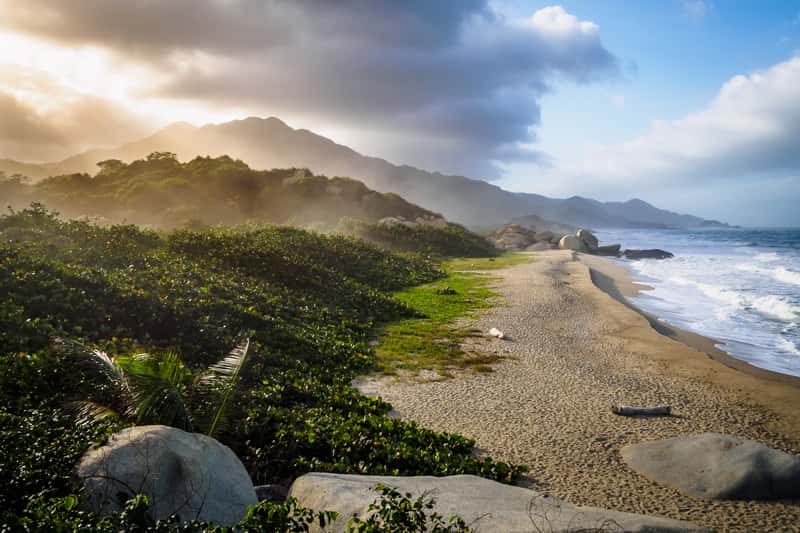 Tayrona,-arrecife
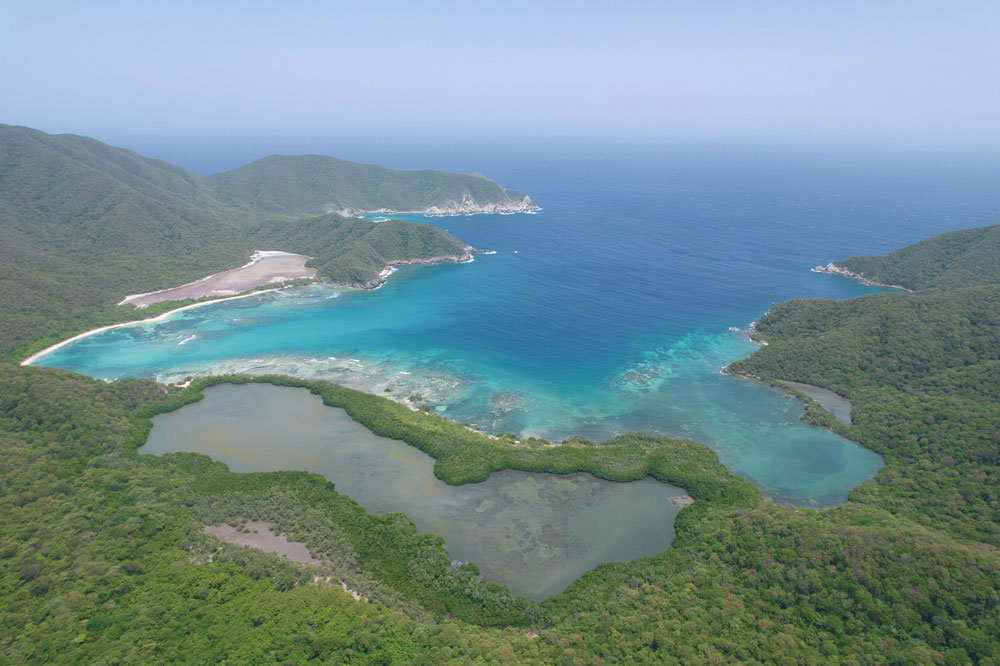 Chengue,-Tayrona
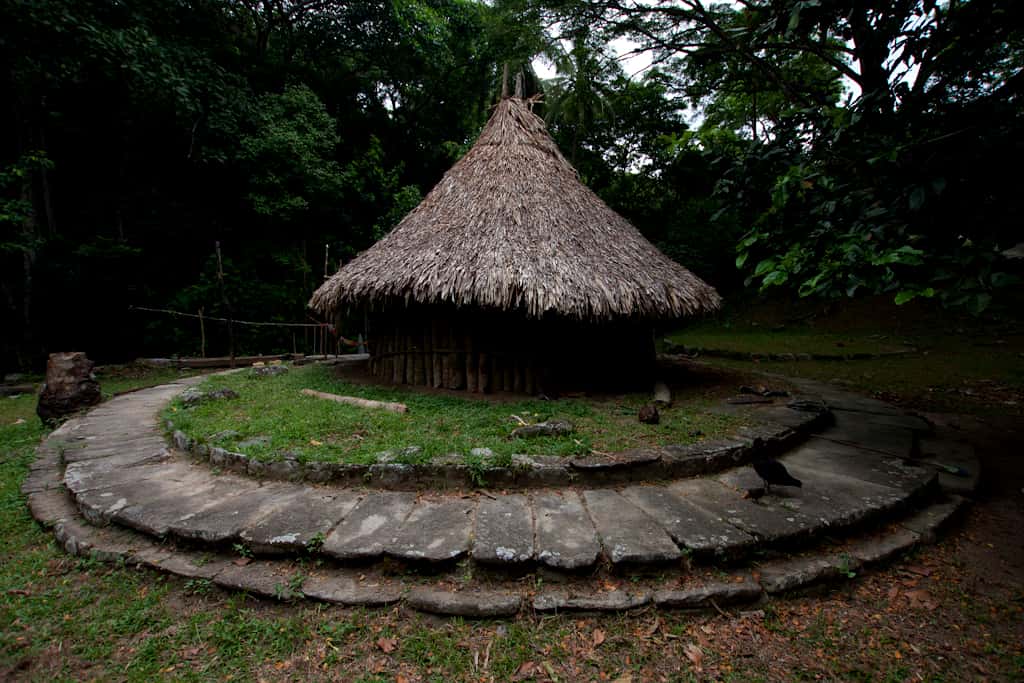 Pueblito Chairama
Are there other beaches and areas with restrictions?
Yes. National Parks has also identified other sectors where access or tourism activities may be restricted under management rules, including:
- Playa del Amor
- Siete Olas
- Cinto — eastern sector
- Guachaquita
- Palmarito
- Cañaveral
However, it is important not to describe all of these places as having exactly the same legal status as Chengue, Pueblito, Los Naranjos and the eastern sector of Bahía Concha.
What can happen if someone enters a restricted area?
Entering a restricted area should not be understood simply as ignoring a tourist recommendation.
Under Colombian environmental legislation, violating environmental regulations or administrative acts issued by the competent environmental authority may constitute an environmental offense.
The environmental sanctioning regime established by Law 1333 of 2009, as amended by Law 2387 of 2024, gives environmental authorities powers to investigate and sanction environmental violations.
Depending on the circumstances and seriousness of the conduct, authorities may impose preventive measures such as:
- Preventive seizure of elements used in an environmental violation.
- Preventive apprehension of wildlife or plant specimens.
- Suspension of activities.
- Other measures necessary to prevent continued environmental damage.
Environmental sanctions can include:
- Written public reprimand.
- Fines of up to 100,000 monthly legal minimum wages.
- Temporary or permanent closure of establishments or activities, where applicable.
- Revocation or expiration of environmental permits, authorizations or concessions.
- Demolition of works, when legally applicable.
- Definitive seizure of certain elements, products or specimens.
- Restoration or return of wildlife and flora specimens, where applicable.
An important legal clarification
This does not mean that every tourist who enters a restricted area automatically receives a fine of 100,000 minimum wages.
That figure is the maximum statutory ceiling, not an automatic penalty for entering a beach.
The competent authority must establish the facts, determine whether an environmental violation occurred and apply the corresponding procedure and sanction according to the circumstances and criteria established by Colombian environmental law.
In other words:
“Knowingly entering an area where tourism is prohibited may result in environmental enforcement proceedings. The specific consequence depends on the circumstances and the applicable legal provisions.”